

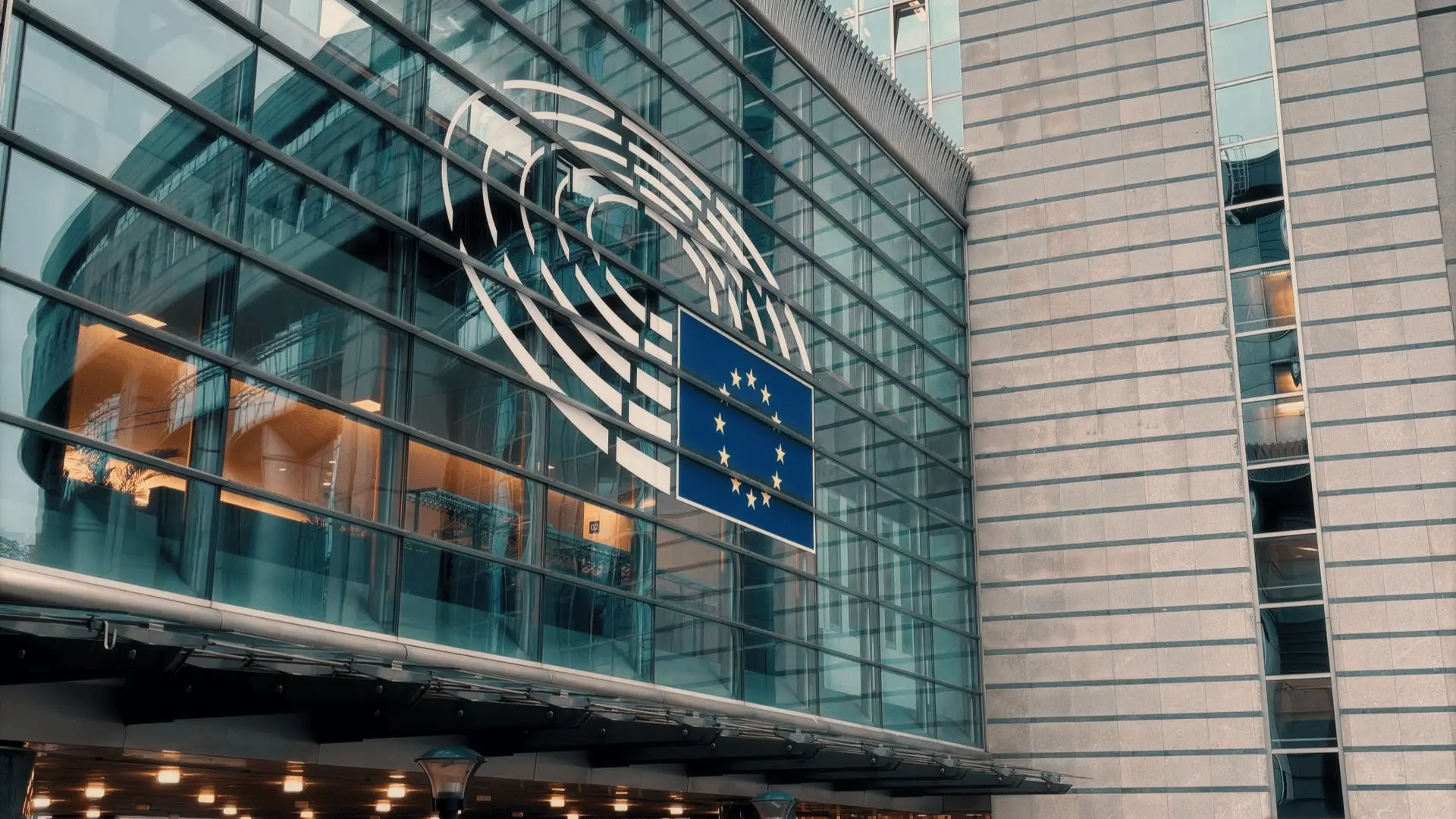
Prohibited practices under the AI Act are eight uses of artificial intelligence that may not be deployed in the European Union in any form - no risk assessment, documentation or consent from the person concerned makes them lawful. The list sits in Article 5 of Regulation (EU) 2024/1689 and has applied since 2 February 2025.
Below are six steps, control questions for each, and the use cases companies most often misjudge, because they treat them as high-risk systems.
Since when do the bans apply, and what does breaching one cost?
Article 5 started applying on 2 February 2025 under Article 113(a) of the regulation, together with the AI literacy obligation and eighteen months ahead of general application. The Digital Omnibus left that date untouched. Breaching a ban carries a fine of up to EUR 35 million or 7 per cent of total worldwide annual turnover, whichever is higher (Article 99(3)). That is the highest threshold in the entire regulation. From 2 December 2026 the list grows by two further bans added by the Digital Omnibus, covering intimate imagery created without consent and material depicting child sexual abuse.
Step 1: The list - which tools touch people at all?
The Article 5 bans do not cover everything AI does. They cover uses aimed at people, so the first move is to narrow your inventory down to those tools.
Control questions: Which systems assess, classify or profile individuals? Which observe people through image, sound or behavioural records? Which generate messages meant to push someone towards a decision? Does the list include tools applied to employees, not only to customers?
If you have no AI inventory, start there - without a list of tools this review is guesswork. We covered it in our article on building an AI system register.
Step 2: Emotions - does anything read an employee's or a student's mood?
Article 5(1)(f) prohibits inferring the emotions of people in the workplace and in education institutions, with exceptions for medical and safety reasons. This is the ban that most often surprises HR teams and training providers.
Control questions: Does any tool analyse the facial expression, tone of voice or speech pace of a candidate or an employee? Do we measure "engagement" of meeting or training participants from camera footage? Does a vendor promise us team sentiment analysis? Has anyone checked what the call scoring module in our system actually computes?
A "yes" here does not create a documentation duty. It creates the need to switch the feature off - this is not a high-risk category.
Step 3: Biometrics - are we inferring attributes we must not ask about?
Two further bans concern biometric data: categorising people to infer, among others, race, political opinions, religious beliefs or sexual orientation (point g), and building facial recognition databases through the untargeted scraping of images from the internet or CCTV footage (point e).
Control questions: Do we use facial recognition anywhere beyond access control? Where did the vendor source the training data? Does any module assign people attributes they never disclosed themselves? Do we have that stated in the vendor contract?
With off-the-shelf tools these answers have to come from the vendor in writing, because the provenance of training data is rarely visible from the interface.
Step 4: Scoring people - is this already social scoring?
Article 5(1)(c) prohibits evaluating people on the basis of social behaviour or personal characteristics where it leads to detrimental or disproportionate treatment in a context unrelated to where the data came from. The line runs at carrying data across contexts.
Control questions: Does data collected for one purpose affect decisions in an entirely different area? Does any system issue people a general trustworthiness score? Is the consequence proportionate to what triggered it? Does the person being scored know the score exists?
If a rating from one area closes doors for someone in another, that is the first signal to pause the rollout and examine how the tool is built.
Step 5: Manipulation and vulnerabilities - does the messaging go too far?
Points a and b prohibit techniques operating beyond the recipient's awareness and the deliberate exploitation of vulnerabilities arising from age, disability or social or economic situation, where the result is significant harm. This ban reaches marketing, sales and consumer-facing products.
Control questions: Does message personalisation draw on information about a recipient's difficult situation? Do we target vulnerable groups, including children and older people? Does an AI-generated interface push users towards a decision they would not take if plainly informed? Has anyone outside the marketing team reviewed those journeys?
For these two bans what counts is the effect on the recipient, not the intent of the team that rolled the tool out.
Step 6: Decision and evidence - what do you do with a doubtful tool?
The review has to end in a recorded decision for every doubtful use case, not a note in someone's head. A ban leaves no remediation path: you switch the feature off or replace the tool.
After this step the organisation should hold:
- a list of tools that touch people, drawn from the AI system register;
- a recorded assessment for each of them, with a date, an author and reasoning;
- vendor statements on data sources and biometric features;
- a decision to switch features off wherever the outcome was doubtful;
- a date for the next review, no later than before 2 December 2026;
- a note to the teams on what may not be enabled without consultation.
The Commission's guidelines on prohibited practices of 4 February 2025 are non-binding, but they show how authorities reason.
On your own or with a tool?
The six steps above fit in a spreadsheet: tools in one column, the question in another, the decision in a third. The difficulty starts with upkeep, because tools change with vendor updates and a new feature can appear without anyone asking.
That is the part the AI TrustCERT platform handles: a register with change history, training with an exam, and reports that let you demonstrate due diligence. If you would rather start with a diagnosis, AI Ready Check gives a first picture in minutes, and the result is computed in your own browser.
Summary
Checking for prohibited practices comes down to six questions: which tools touch people, whether anything reads emotions at work or in education, whether biometric data is used to infer sensitive attributes, whether scoring carries data between unrelated contexts, whether the messaging exploits a recipient's vulnerability, and what you record as evidence.
The bans have applied since 2 February 2025 and carry the highest fines in the regulation. From 2 December 2026 the list gets longer. An organisation that runs this review now will, in most cases, close it with a single line in its documentation. One that skips it will hear about the problem from someone outside.
This article walks through the check, but does not settle the legality of any specific tool - where there is doubt, confirm the assessment with a lawyer.
Sources
- Regulation (EU) 2024/1689 (AI Act) - Article 5 (prohibited practices), Article 99 (penalties), Article 113 (application dates): eur-lex.europa.eu
- AI Act Service Desk (European Commission) - Article 5: Prohibited AI practices, points a to h with their exceptions: ai-act-service-desk.ec.europa.eu
- European Commission - Guidelines on prohibited artificial intelligence practices, 4 February 2025 (non-binding): digital-strategy.ec.europa.eu
- Regulation (EU) 2026/1744 (Digital Omnibus on AI) - amendments to Article 5 and the related dates: eur-lex.europa.eu
This article was written with the help of artificial intelligence and reviewed before publication by the author, who takes editorial responsibility for it.