

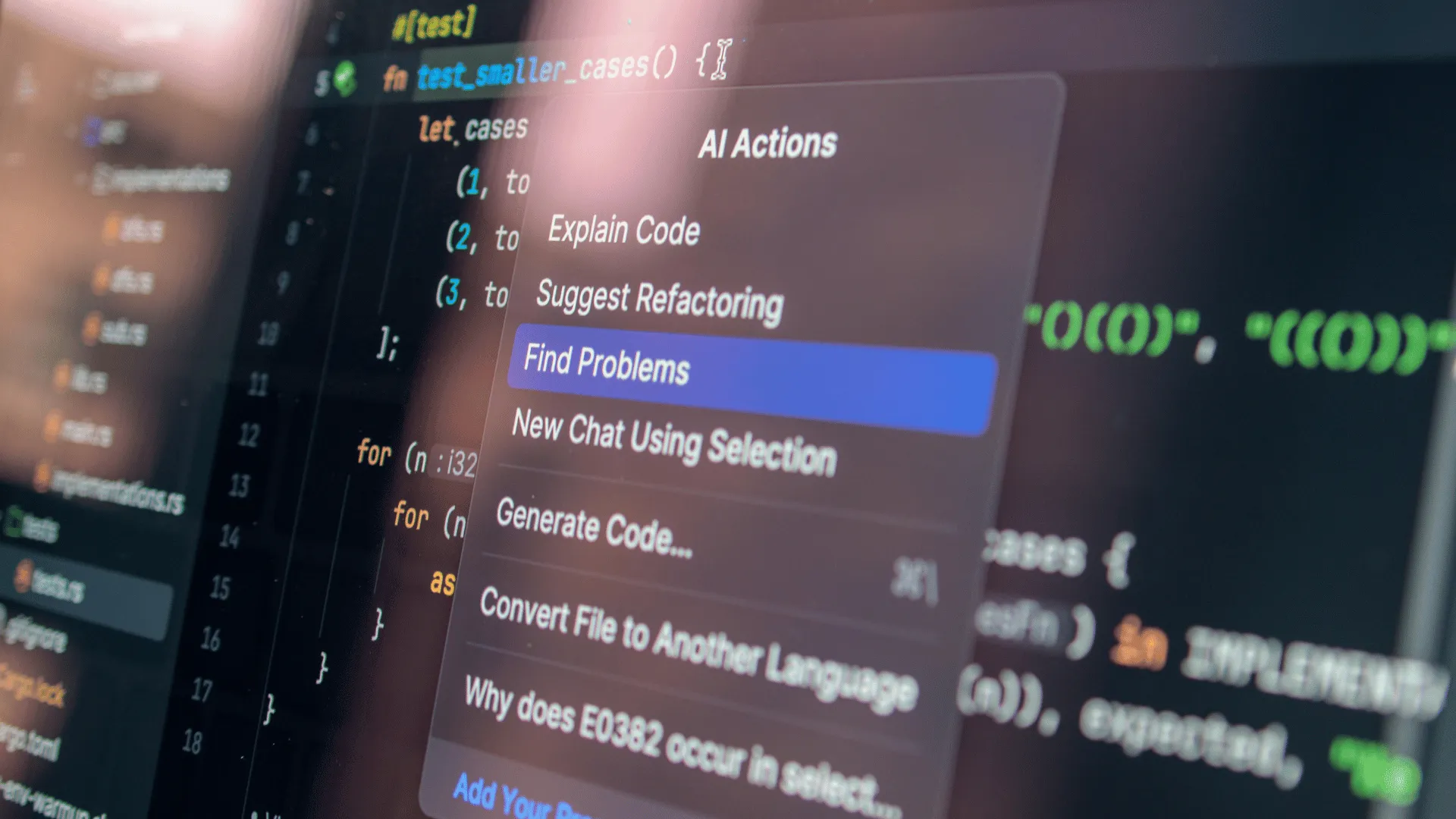
Until recently, conversations about language models came down mainly to one question: which one gives the smartest answers? Today that is no longer enough. The latest updates from the main providers - OpenAI, Anthropic and Google - reveal something much bigger than another jump on the benchmarks. LLMs are increasingly rarely just a chat window. They are becoming tools for working with documents, code, data, browsers, business applications and external systems.
In other words: we are moving from AI that "responds" to AI that acts.
That is exciting, but it also demands more. Because the more a model can do, the more important it becomes to ask whether the organisation can maintain oversight - not just technically, but also procedurally, legally and ethically. And that is precisely where the question of AI trust begins - a question very close to what AI Trust Cert is about.
OpenAI: more powerful models, more personalisation and a focus on safe deployment
In the OpenAI ecosystem, recent months have been defined by the development of the GPT-5 series and an increasingly strong shift towards models used for real work. GPT-5.4 and GPT-5.5 brought improvements in reasoning, tool use, coding, document analysis and agentic tasks. OpenAI also highlights a reduction in hallucinations in GPT-5.5 Instant, particularly in areas where accuracy is especially important: medicine, law and finance.
This is a meaningful signal. For a long time, excitement about LLMs went hand in hand with a fairly simple caveat: "the model can make things up." Today providers can no longer treat that as a minor product flaw. If a model enters the workplace, analyses files, supports decisions and suggests actions, its reliability becomes a component of operational risk.
Also noteworthy is the development of memory and personalisation in ChatGPT. On one hand this is convenient: the system better understands the user, can refer to earlier conversations and work context. On the other hand, it immediately raises a question about control: what does the model remember, what does it draw on, how can the user inspect and correct this? OpenAI has begun showing "memory sources" - information that influenced a personalised response. This is a good direction, because personalisation without transparency quickly becomes a black box.
The cybersecurity thread is also worth noting. OpenAI is developing its Trusted Access for Cyber programme, in which more advanced model capabilities are made available to verified security professionals. This is a good illustration of the tension the whole industry will need to navigate: the same model capabilities can help defend systems or attack them. The difference lies not solely in the technology, but in access controls, user verification, abuse monitoring and clear rules of use.
Anthropic: Claude is increasingly "working", but safety remains part of the product
Anthropic has long built Claude around a narrative of safety, responsible scaling and model predictability. The latest updates fit squarely in that direction. Claude Opus 4.7 was presented as a model stronger in programming, agentic, visual and multi-step tasks. Particularly interesting are improvements in areas that matter in practice: instruction following, long-context work, greater consistency, and the ability to verify its own outputs.
That sounds technical, but for businesses it has a very concrete meaning. A model that can write code, analyse documents, use tools and execute long sequences of actions is no longer a simple assistant. It begins to resemble a digital collaborator. And a collaborator needs a defined scope of permissions, responsibilities and limits.
Anthropic is also building out the compliance layer. Claude has gained integrations with security and compliance tools so that IT teams can manage it in the same way they manage other applications in the enterprise environment. This is a very important trend: LLMs cannot remain a "separate island" outside security policies, logging, access control and oversight.
In the background, the approach to frontier AI safety is maturing. Anthropic is updating its Responsible Scaling Policy and Frontier Safety Roadmap - documents describing how the company assesses and limits the risks of increasingly powerful models. These are not materials the average user will read over morning coffee. But for organisations deploying AI they are significant, because they show that safety cannot be a footnote added after a model launch. It should be part of the design, testing and release process.
Google Gemini: AI entering search, productivity tools and agents
Google's recent updates place the strongest emphasis on the "agentic" direction for Gemini. Gemini 3.5 Flash was introduced as a model designed for long, multi-step tasks: coding, planning, tool use and executing more complex processes. And it isn't just for developer environments - the model is reaching mass-use products too, including AI mode in search.
This may be one of the most significant changes for the ordinary user. AI is no longer something you have to visit separately. It is being built into the places where we already work, search for information, write, analyse and make decisions. For convenience, that is great news. For trust, it is a challenge.
Google is also developing Managed Agents in the Gemini API - the ability to run agents in a controlled, isolated environment. This is a technical detail, but a very important one from a security perspective. An agent that can use tools and execute code should not operate in an unbounded space. It needs a sandbox, permissions, versioned instructions and controls over which data and systems it can access.
The second prominent direction is multimodality. Gemini Omni is designed to combine text, image, audio and video understanding with generation and editing. This opens enormous possibilities for marketing, education, design and communication. At the same time, it raises the stakes around content authenticity. The easier it is to generate realistic video, voice or images, the more important it becomes to label content, track material provenance and distinguish creative work from documentation of reality.
Google also highlights the development of safety measures within its Frontier Safety Framework, including cyber and CBRN areas. In practice, this means that the biggest providers are increasingly treating model safety as a dimension of competition, not just a regulatory obligation.
The shared direction: models are becoming more autonomous
Looking at OpenAI, Anthropic and Google together, one trend is clear: LLMs are becoming more agentic.
They can plan, use tools, work with files, search for information, write code, process images, analyse data, trigger processes and increasingly sustain tasks over extended periods. This is no longer just a "better chatbot". It is a layer of automation that is entering real business processes.
For organisations, this means a change of mindset. It is no longer sufficient to ask "which model is best?". You need to ask:
- What data will the model have access to?
- Can it execute actions, or only suggest answers?
- Who approves its decisions?
- Are responses logged?
- Does the user know they are working with AI?
- Can the company explain why it chose this model and what it is being used for?
- Are there procedures in place for errors, data leaks or incorrect recommendations?
These questions are less impressive than a new model demo. But in practice they matter more.
AI security does not end with the model
A common mistake is thinking that AI security depends solely on the provider. Of course, OpenAI, Anthropic and Google must test models, strengthen safeguards, limit misuse and publish information about risks. But an organisation deploying AI also has its share of responsibility.
Even the best model can be used badly. It can be connected to overly sensitive data. It can be given excessively broad permissions. Employees can be allowed to use tools without any rules. Generated content can be published without verification. Decisions that should remain under human control can be automated.
This is why mature AI deployment increasingly resembles risk management rather than buying a software licence. Policies, roles, access, audit, training, use-case classification and decision documentation all matter. Technology is important, but it is not enough on its own.
Why does this connect to AI Trust Cert?
Because AI Trust Cert should not be seen as a "certificate from an AI provider". Its purpose is broader: to demonstrate that an organisation understands how to use artificial intelligence responsibly.
In a world where models change every few weeks, trust cannot be based on the name of a specific vendor. Today a company uses ChatGPT, tomorrow Claude, the day after Gemini, and next month a specialised agent embedded in a CRM tool, HR system or analytics platform. Models will change. What remains is the question of process.
- Can the company assess the risk of using AI?
- Does it know which uses are low and which are high risk?
- Are employees trained?
- Are there rules for handling data?
- Does AI support human judgment, or replace decisions without oversight?
- Is the user informed when they are in contact with AI?
- Can the organisation respond to incidents?
This is the foundation of trust. Not a declaration that "we use safe AI", but concrete evidence that we use it consciously.
New releases matter. But what matters most is the pace
The most striking thing about the current wave of LLMs is not that one model is slightly better than another. The most striking thing is the pace of change. New versions, new features, agents, memory, multimodality, enterprise tools, compliance integrations, sandboxes, cybersecurity models, video generation, code and document work - all of this is happening simultaneously.
For organisations, this means one thing: AI can no longer be managed "case by case". Simple but stable rules are needed. Who can deploy AI tools? How do we evaluate them? How do we classify risk? How do we assess vendors? How do we inform customers? How do we train employees? How do we document use?
Without this, an organisation will always be behind. Because by the time it approves one tool, employees will already be using three more.
Summary
The latest updates from OpenAI, Anthropic and Google show that the LLM market is entering a new phase. Models are becoming more capable, more tightly integrated with daily work, and increasingly designed as agents rather than conversational interfaces.
This creates enormous opportunities. We can analyse information faster, create content, write code, serve customers, organise documents and automate processes. But with this comes greater responsibility. A model that only responds can be wrong. A model that acts can cause real harm.
The future of AI in organisations will therefore not depend solely on who chooses the most powerful model. It will depend on who can deploy AI in a controlled, transparent and safe manner.
Because trust in AI is not built at the moment a new model is launched. It is built when an organisation can demonstrate that it knows what it is doing.
Sources
- OpenAI - Introducing GPT-5.5
- OpenAI Help Center - ChatGPT Release Notes, memory and personalisation update (May 2026)
- OpenAI - Introducing GPT-5.4
- OpenAI - Trusted access for the next era of cyber defense
- OpenAI - Scaling Trusted Access for Cyber with GPT-5.5
- Anthropic - Introducing Claude Opus 4.7
- Anthropic Help Center - Claude Release Notes, compliance integrations update (May 2026)
- Anthropic - Responsible Scaling Policy, updated 26 May 2026
- Anthropic - Frontier Safety Roadmap Updates
- Google DeepMind - Gemini 3.5: frontier intelligence with action
- Google - 100 things we announced at I/O 2026
- Google - Introducing Managed Agents in the Gemini API
- Google - Introducing Gemini Omni
This article was written with the help of artificial intelligence and reviewed before publication by the author, who takes editorial responsibility for it.